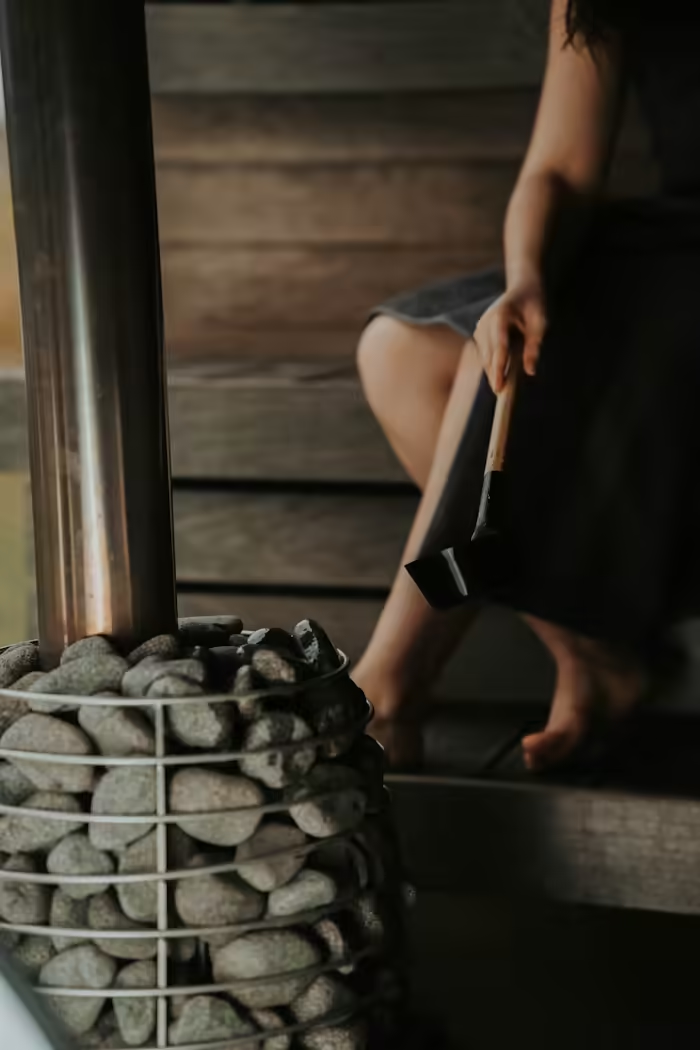
There’s something deeply instinctive about stepping into warmth. Whether it’s the enveloping heat of a sauna, the buoyant calm of a hot spring, or the rhythmic pulse of water against tired muscles, humans have long turned to thermal experiences as a way to restore balance. This isn’t a modern trend dressed up in luxury branding—it’s a practice rooted in thousands of years of human history.
A Tradition as Old as Civilization
Long before “wellness” became an industry, cultures across the world built rituals around heat and water. Ancient Roman bathhouses weren’t just places to get clean—they were social hubs, recovery centers, and spaces for mental reset. In Japan, onsen bathing became both a spiritual and physical practice. Nordic cultures embraced the sauna as a near-sacred ritual, pairing intense heat with cold plunges to invigorate body and mind.
What connects all of these traditions is a shared understanding: thermal exposure changes how we feel—physically, mentally, and even emotionally.
The Science Behind the Sensation
Modern research is catching up to what ancient cultures seemed to know intuitively. Heat therapy increases blood circulation, helping oxygen and nutrients reach muscles more efficiently. This can ease soreness, accelerate recovery, and reduce stiffness. Warm water immersion, in particular, adds the benefit of buoyancy, reducing strain on joints while promoting relaxation.
On the flip side, contrast therapy—alternating between hot and cold—stimulates the vascular system, potentially improving resilience and recovery speed. It’s not just about comfort; it’s about physiological adaptation.
Then there’s the nervous system. Heat encourages parasympathetic activity—the “rest and digest” mode that helps counterbalance stress. In a world that keeps most people in a constant state of stimulation, this shift alone can be transformative.
Beyond Recovery: A Ritual of Pause
Thermal wellness isn’t only about fixing what’s broken. It’s about creating space to pause. Immersing yourself in heat or water naturally slows you down. There are no notifications, no multitasking—just sensation and stillness.
That pause has value. It’s where mental clarity emerges, where tension dissolves, where the body gets permission to recover rather than perform.
The Modern Revival
Today’s spas and wellness centers have reimagined these ancient practices with contemporary design and technology. Hydrotherapy circuits, infrared saunas, steam rooms, and mineral pools are more accessible than ever. Yet at their core, they offer the same fundamental experience humans have sought for centuries: warmth, water, and restoration.
The difference now is intention. People aren’t just stumbling into these experiences—they’re seeking them out, recognizing their role in long-term health and balance.
Why It Matters Now
In an era defined by speed, stress, and digital overload, thermal wellness offers something increasingly rare: a tangible, physical way to disconnect and recalibrate.
It doesn’t require complicated routines or expensive equipment. At its simplest, it’s about engaging with elements that have always been available to us—heat and water—and allowing them to do what they’ve always done.
Restore.
Thermal wellness isn’t a passing trend. It’s a return—to rhythm, to ritual, and to a slower, more grounded way of caring for the body.